
Catering and Buffet Portable Warming
Catering and buffet warming
Build warm-service stations around the event, not around cords or fuel.
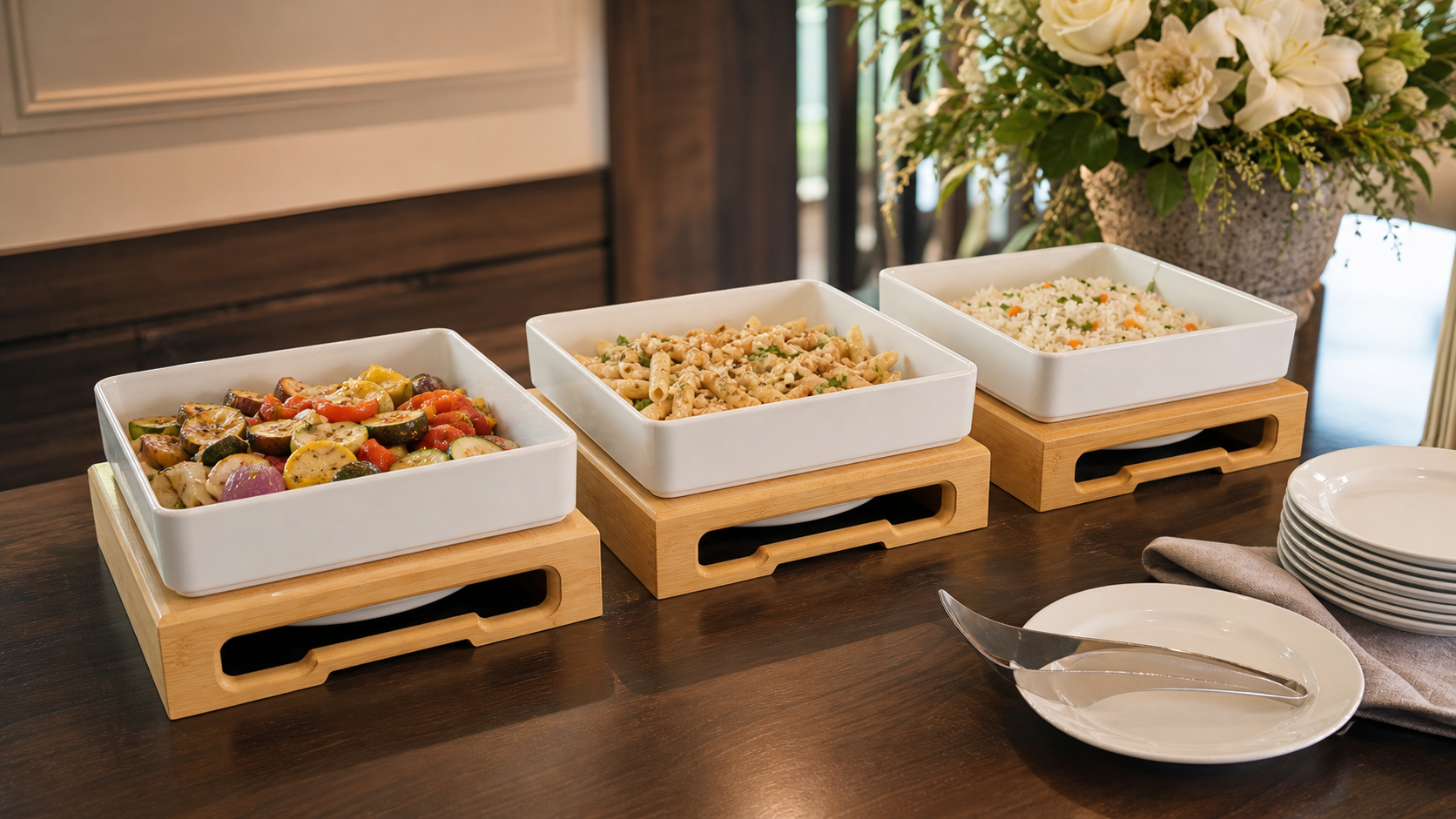
Insta Hot Plate gives catering teams a portable retained-heat station for food and beverage moments where guest-facing cords, open flame, and fuel cans do not fit the service style.
The 8-inch product is the practical starting point: plan the number of stations, charge plates in a staff-managed area, serve cord-free, and rotate charged backups when a longer event needs continuous warm presentation.
No flame is a major reason catering teams should consider this workflow: the guest-facing station can stay warm without gel fuel, open flame, or a live cord across the serving table.
Planning workflow
Start with the event, then decide the station count.
For catering and buffet service, the first question is not only product quantity. The event type, menu, service duration, container size, available power, and guest-facing presentation determine how many Insta Hot Plates, frames, chargers, and backups make sense.
Plan stations
Event type, dish size, vessel fit, and service duration.
Charge plates
Use outlets indoors, or a suitable power station off-site.
Serve cord-free
Move charged plates into frames or service stations.
Swap backups
Rotate charged plates in when a station cools.
Dish and vessel size
Power access
Station count
Backup rotation
Frame presentation
8-inch product fit
Insta Hot Plate works best with reasonable-size vessels that sit well on the 8-inch surface. It is not meant to make one small station carry a full oversized buffet pan by itself.
Frame-assisted service
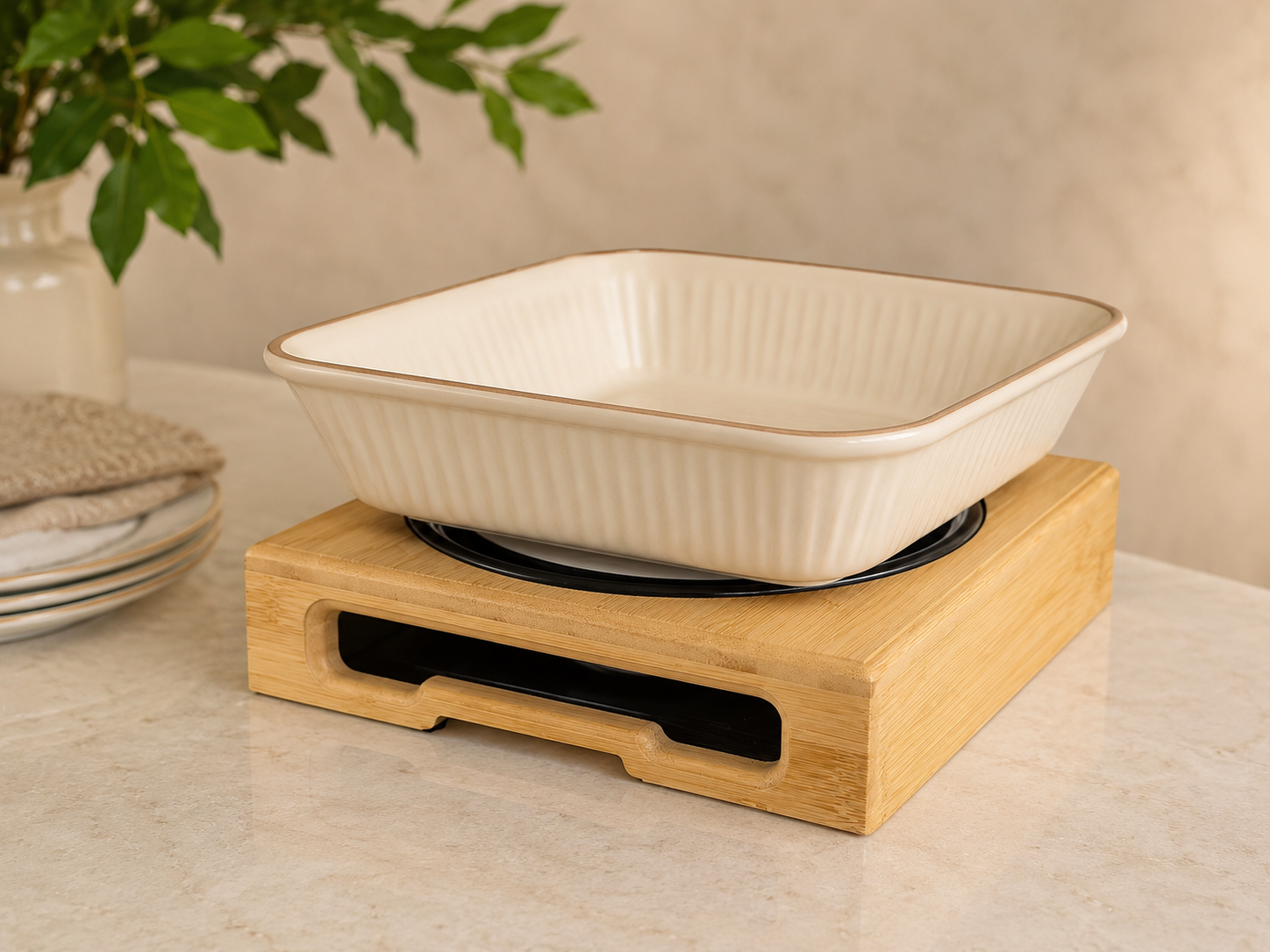
For square or rectangular containers, the wood frame can improve height, support presentation, and help the station feel integrated with the buffet line. Frame colors can be matched to different event styles.
Rotation solves time limits
For longer service windows, keep backup plates charging while charged plates are in service. Swap a cooler plate out, place a charged plate in, and recharge the used plate if the event continues.
No flame at service
Warm stations can be presented without open flame or fuel cans on the guest-facing table. The plate is still hot, so staff should handle it with normal high-heat discipline.
Indoor event workflow
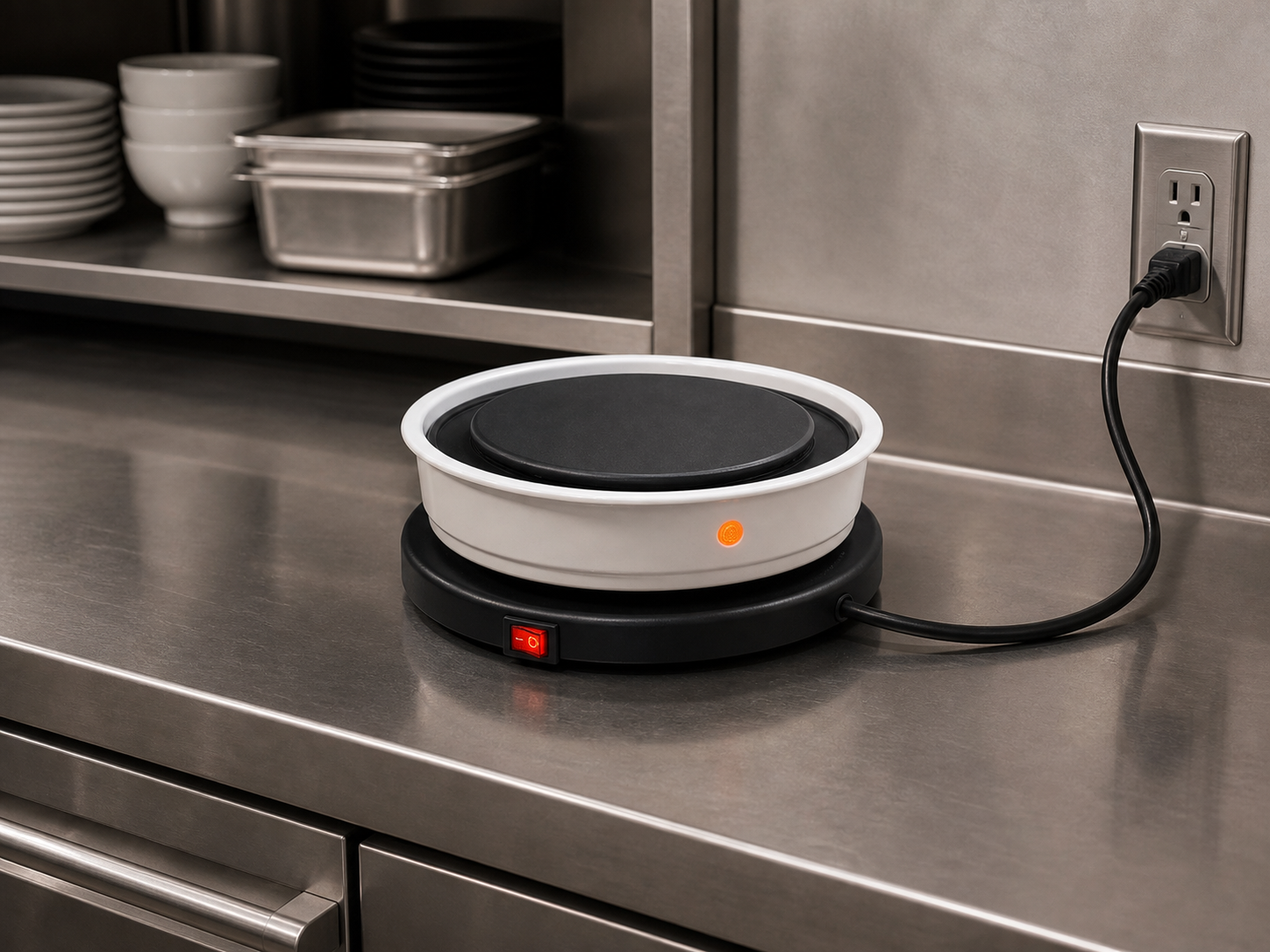
When outlets are available, charge multiple stations in the staff area.
Indoor venues are usually the easiest setup because staff can charge multiple Insta Hot Plates near accessible outlets before and during service. Each charger/base should be treated as an electrical load around 600 to 700 watts, so the team should avoid exceeding outlet or circuit capacity.
- Plan: decide how many warm stations the event needs.
- Charge: heat plates on their charger/base in a staff-managed area.
- Serve: move charged plates into frames or directly into the guest-facing setup.
- Rotate: keep backup plates charging so staff can swap them when a service plate cools.
Outdoor or no-outlet workflow
Use a suitable power station when normal outlet access is not available.
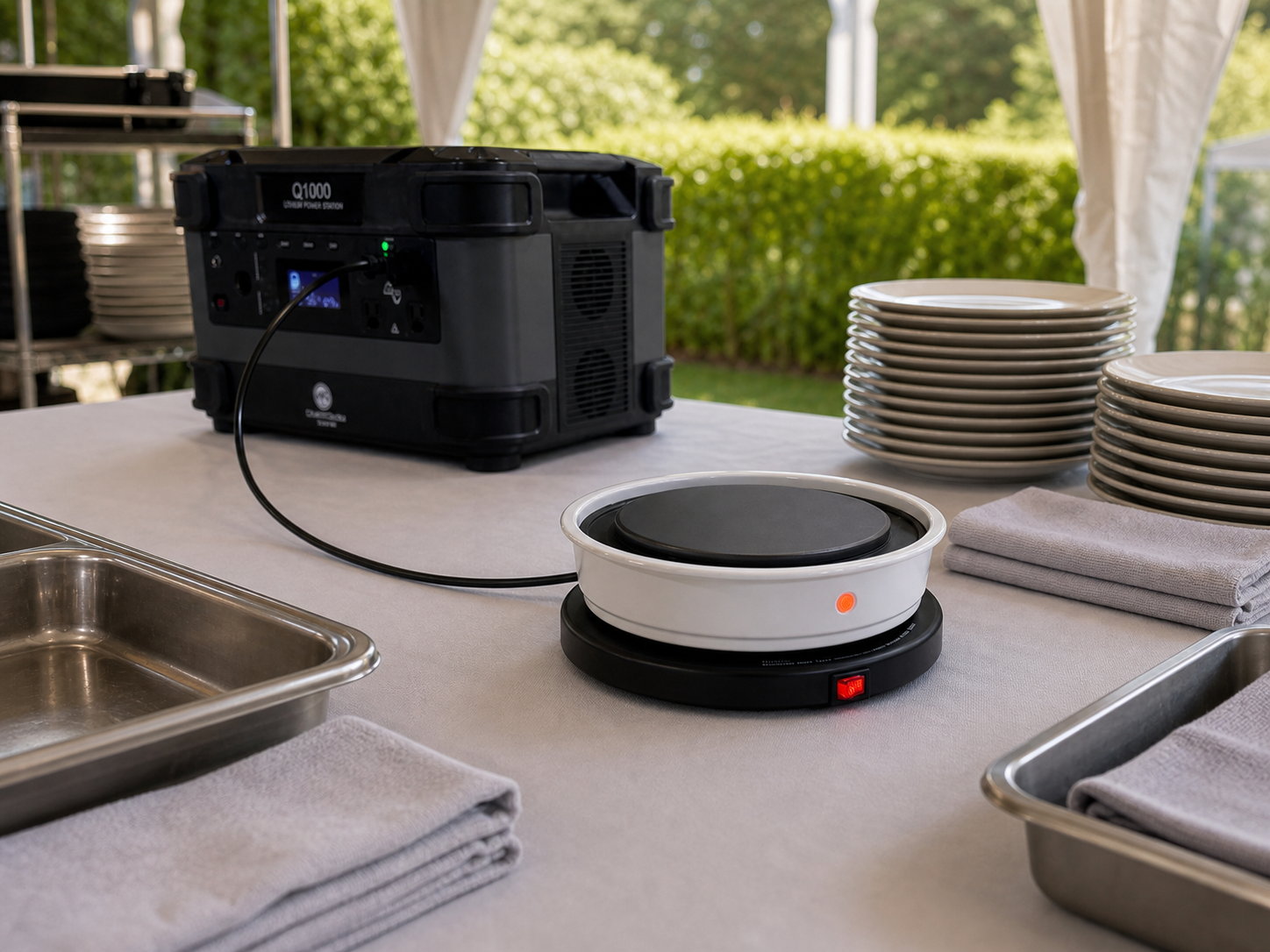
For outdoor events, temporary service areas, or locations without accessible outlets, a suitable portable power station can support a staff-managed charging area. The power source stays away from the guest-facing table; only the heated plate moves into service.
Runtime and power capacity should be planned for the event. Do not assume a portable power station can support every station or full event duration without checking the actual load and schedule.
Service window
Plan around a 30-minute to 1-hour warm-service window, then rotate.
For typical restaurant and catering planning, TAIBAI positions the 8-inch Insta Hot Plate around roughly 30 minutes to 1 hour of useful retained heat depending on the vessel, food, ambient conditions, and service pace. A practical lower working-temperature planning point is around 150°F, but each dish and service style should be checked by the operator.
For longer events, the operational answer is rotation: keep backups charging, swap when a station is no longer warm enough for the food or presentation goal, and return cooler plates to the charging area.
Frame and vessel strategy
Match the container to the 8-inch station.
Use ceramic, glass, or metal vessels that are safe around high heat and sized for the station. For square catering containers, the wood frame can raise the presentation height and make the station look finished instead of improvised.
TAIBAI can discuss multiple frame finishes so the setup fits home-style buffets, weddings, business events, tasting rooms, hotel breakfast, or premium private-service stations.
Small event buffet
Use one or a few stations for compact dishes, sauces, appetizers, breakfast items, or warm hospitality moments where presentation matters.
Wedding or private event
Pair frames with elegant containers so warm stations look intentional on a decorated service line instead of like utility equipment.
Business and hotel service
Plan several stations with a staff-managed charging area and a clear rotation schedule for breakfast, tasting, meeting, or hospitality service.
For a catering quote, describe the event workflow.
Useful details include event type, indoor/outdoor setup, outlet access, expected service duration, food or beverage type, vessel size and material, number of stations, whether frames are needed, backup rotation plan, country/state, and whether the project needs only 8-inch units or a larger/custom discussion.